
Can Golf Carts Be Street Legal?
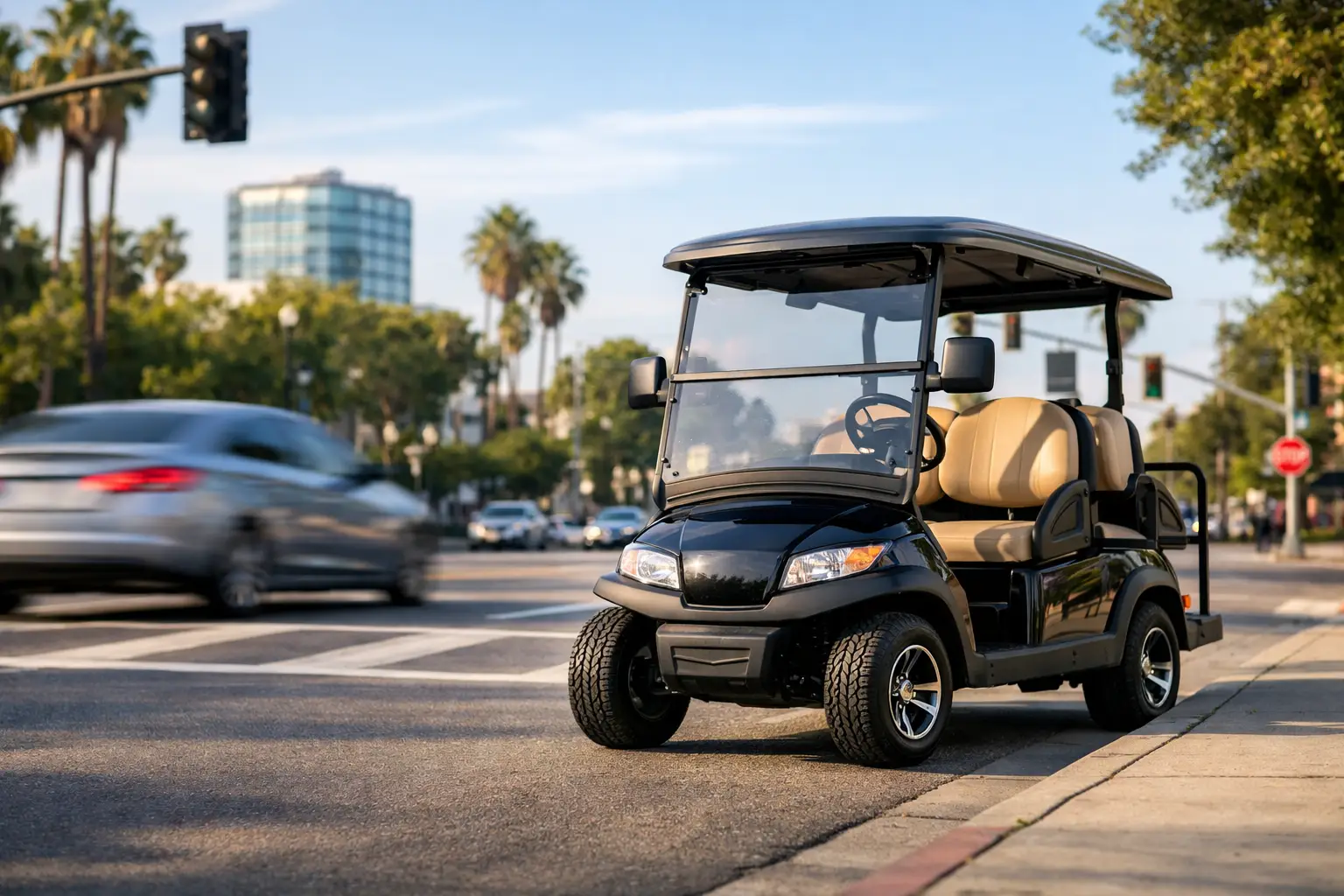
You see a sleek electric cart cruising through a beach town or master-planned community, and the question comes up fast: can golf carts be street legal? The short answer is yes, sometimes - but it depends on how the cart is built, how it is registered, and where you plan to drive it. A cart that feels perfect for neighborhood trips can be fully legal in one area and restricted to private property in another.
That gray area is exactly why buyers get tripped up. A lot of people assume any golf cart can go on public roads if it has lights and a windshield. Others assume none of them can. The truth sits in the middle, and knowing the difference before you buy saves time, money, and frustration.
Can golf carts be street legal in the US?
Yes, but not automatically. In many parts of the US, a standard golf cart is not street legal right off the lot unless it meets local and state requirements. In some cases, what people call a "street legal golf cart" is technically a low-speed vehicle, or LSV, which falls into a different legal category than a traditional golf cart.
That distinction matters. A standard golf cart is usually built for golf courses, private communities, and low-speed recreational use. An LSV is designed to meet specific federal safety standards and is generally intended for roads with lower posted speed limits, often 35 mph or less depending on local law.
If you are shopping for a cart for neighborhood driving, school pickups, community cruising, or quick local errands, you should never assume the vehicle is ready for public roads just because it looks upgraded. Street legality comes down to equipment, classification, and local rules.
What makes a golf cart street legal?
In most cases, a street-legal setup requires more than cosmetic upgrades. The vehicle typically needs a package of safety equipment along with registration and insurance requirements that vary by state. Common requirements may include headlights, taillights, brake lights, turn signals, reflectors, mirrors, a horn, seat belts, a windshield, and a vehicle identification number.
Some states or cities also require a minimum speed capability, which is one reason many true street-legal models are classified as LSVs rather than basic golf carts. If a cart cannot meet the required performance standard, adding accessories may still not make it legal for public-road use.
This is where buyers should slow down and ask better questions. "Can I add lights later?" is not the same as "Will this be legal where I live?" The second question is the one that matters.
Golf cart vs. low-speed vehicle
The terms get used interchangeably, but they are not always the same thing. A golf cart is generally smaller in scope and may be limited to lower speeds, often around 15 to 20 mph. A low-speed vehicle is a federally recognized vehicle category that usually operates in the 20 to 25 mph range and is built to meet stricter standards.
For the buyer, the takeaway is simple: if your goal is road use, buy with road use in mind from the start. Retrofitting a standard cart can work in some areas, but not always, and the process can end up costing more than expected.
State and local laws change everything
The biggest mistake people make is treating street legality like a national yes-or-no issue. It is not. State laws set broad rules, but county, city, and community regulations can add another layer. That means a cart could be permitted on certain roads in one Florida town, restricted in a nearby municipality, and treated differently in Texas or California.
Some jurisdictions allow golf carts on roads posted at 25 mph. Others allow crossings on higher-speed roads but not full travel on them. Some require registration decals or local permits. Gated communities and resort areas may have their own operating rules even when local government allows broader access.
That is why the smartest buyers start with route planning. Think about where you actually want to drive - from home to the clubhouse, around the neighborhood, to the marina, to a local cafe, or to community amenities. Then verify whether those specific roads allow golf carts or LSVs.
Equipment you will likely need
If you are trying to make sure a vehicle is ready for public-road use, the equipment list deserves real attention. Buyers usually focus on style first - seats, wheels, color, audio, and lift kits - but legal equipment is what keeps the cart usable beyond private property.
A street-ready vehicle may need headlights, taillights, brake lights, turn signals, side and rear mirrors, a horn, parking brake, DOT windshield, seat belts, and reflectors. In many cases, you will also need a VIN, registration, and insurance. Some areas may require a license plate and a valid driver’s license for the operator.
There is a practical side to this beyond compliance. Those features make the cart more comfortable and safer in real neighborhood traffic. If you plan to drive at dawn, after sunset, or with family on board, proper mirrors, lights, and seat belts are not just legal checkboxes. They make ownership easier and more confident.
Can you make an existing golf cart street legal?
Sometimes, yes. But this is where optimism can get expensive.
If you already own a golf cart, you may be able to add the required equipment and complete the needed paperwork. The challenge is that not every cart qualifies, and the cost of parts, labor, inspection, and registration can add up quickly. Even after upgrades, your state may still classify the vehicle in a way that limits road access.
That is why many buyers skip the conversion gamble and choose a model designed for street use from day one. It is usually faster, cleaner, and easier to insure and register. You also avoid the common problem of piecing together aftermarket parts only to find out one missing requirement keeps the cart off public roads.
When a conversion makes sense
A conversion can make sense if you already own a newer cart with a solid platform, your local rules are straightforward, and you are only trying to use it on a narrow set of approved streets. If your area has stricter enforcement or you want broader road flexibility, buying a purpose-built street-ready vehicle is usually the smarter move.
What buyers should check before purchasing
Before you buy, ask the dealership or seller very direct questions. Is this vehicle a standard golf cart or an LSV? What equipment is already installed? Has it been built to meet street-use requirements? What paperwork comes with it? Will it be easier to title, register, and insure in your state?
You should also ask about real-world usability. How fast does it go? What is the battery range? Is it comfortable for passengers? Does it include practical features like backup cameras, upgraded lighting, premium seating, or weather protection? A cart can be legal on paper and still feel limited if it was not chosen for how you actually live.
For many homeowners and community buyers, the best setup is one that balances legal compliance with everyday convenience. That means choosing a vehicle that looks good in the driveway, handles neighborhood trips easily, and comes equipped for the way you plan to use it.
Why buying from a dealer matters
Street legality is one area where buying from a knowledgeable dealer can save you a lot of second-guessing. Private sellers may not know the difference between a street-style cart and one that is truly road-eligible. Online listings are even worse for this. "Street legal" gets tossed around loosely, and buyers often discover the gaps later.
A dealership that understands electric carts, financing, service, and multi-state delivery can help you match the vehicle to your location and intended use. That includes explaining model classifications, installed equipment, warranty support, and the practical side of ownership after the sale. For buyers who want a polished experience instead of a project, that matters.
At EV Superstore, that kind of guidance is part of the value. The goal is not just to sell a cart - it is to help buyers get into a vehicle that fits their lifestyle, feels premium, and makes ownership simple from day one.
The bottom line on street legality
If you are asking can golf carts be street legal, the answer is yes - but only when the vehicle and the local rules line up. The best purchase is not the cheapest cart with a few add-ons. It is the one that fits your roads, your community, and your day-to-day plans without creating headaches later.
A great electric cart should make life easier, not more complicated. Before you buy, check the laws where you drive, verify the equipment, and choose a vehicle built for the way you actually want to use it.