
Can You Make Electric Golf Carts Faster?
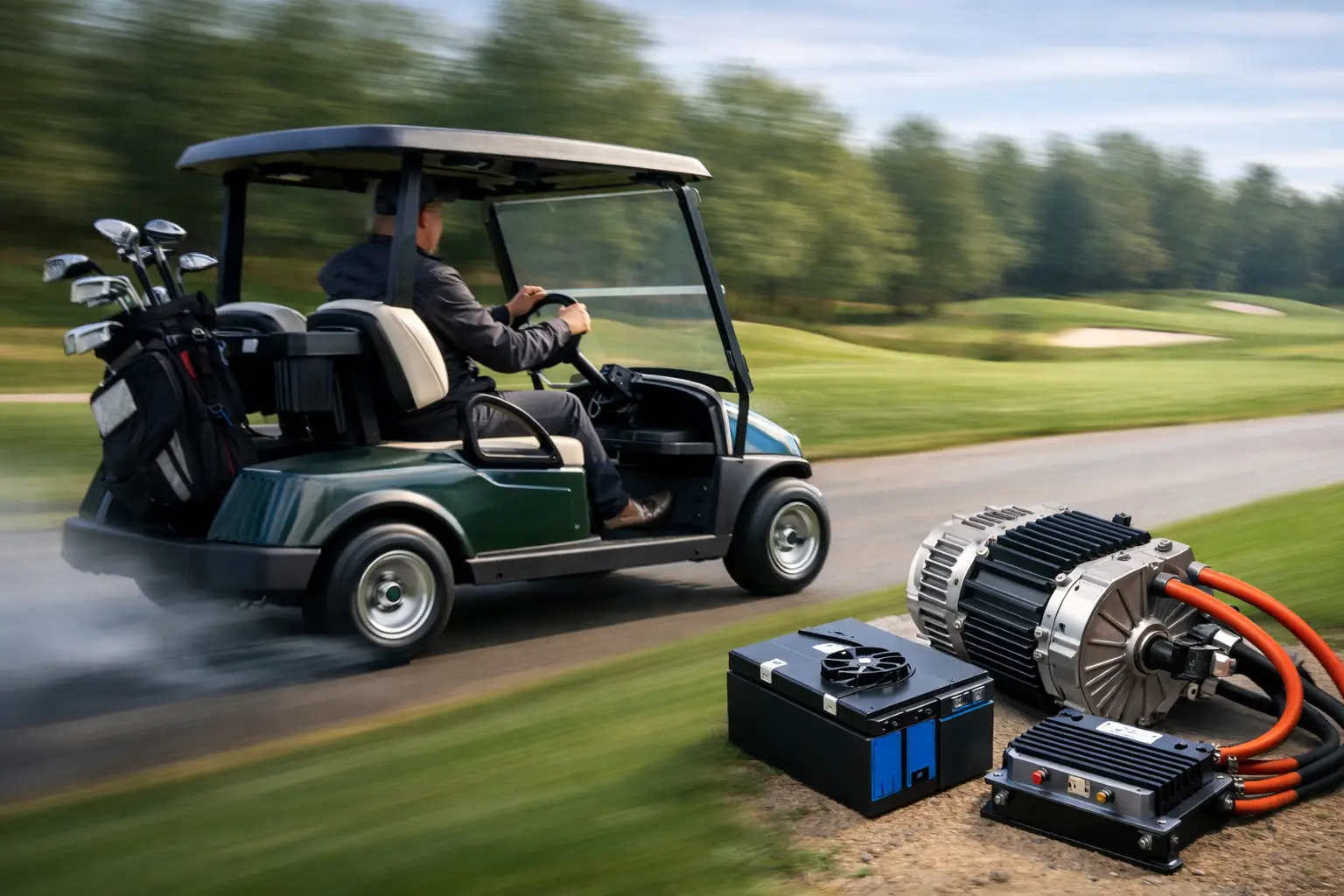
The first time your cart feels slow, it usually happens in a very specific moment - a longer neighborhood stretch, a slight hill, or that point when traffic around your community moves just a little quicker than your cart can comfortably keep up. So, can you make electric golf carts faster? Yes, in many cases you can. But the better question is how much speed makes sense for the way you actually drive, and what you might give up to get it.
For personal-use carts, speed is part convenience and part lifestyle. Nobody wants a cart that feels underpowered on everyday rides. At the same time, chasing top speed without thinking about braking, ride quality, battery draw, or local rules is how a simple upgrade turns into a headache. If you want more performance, the smart move is to look at the whole setup, not just the speedometer.
Can You Make Electric Golf Carts Faster Without Problems?
Sometimes, yes. Sometimes, not really. It depends on the cart, the factory programming, the motor and controller combination, tire size, battery system, and whether the vehicle was built for neighborhood cruising or true higher-speed use.
Many electric golf carts leave the factory with conservative settings. That is not a flaw. It is usually done to balance battery range, safety, drivetrain life, and compliance. In those cases, modest speed gains may be possible through controller programming or approved upgrades. But if a cart is already near the practical limit of its current components, trying to squeeze out more speed can create more heat, more wear, and less reliability.
That is why the cleanest path is often not "make this cart fast at any cost." It is "match the cart to the speed you want from the start." For a lot of buyers, that means choosing a model designed for stronger performance instead of trying to rebuild an older or entry-level cart into something it was never meant to be.
What Actually Makes an Electric Golf Cart Faster?
Speed comes from a combination of factors, not one magic part. The motor matters, but so does the controller that regulates power delivery. The battery pack matters too, especially how much consistent voltage and current it can deliver under load. Gear ratio, tire diameter, total vehicle weight, and even the terrain you drive every day all play a role.
If your cart has a speed governor or programmable limit, adjusting that setting may provide a noticeable bump. Some carts also respond well to a controller upgrade, which can improve acceleration and raise top-end speed if the rest of the system can support it. A higher-output motor can help, but only when paired correctly with the controller and battery. Otherwise, you end up paying for potential you cannot fully use.
Tires are another factor people often overlook. Taller tires can increase top speed because they cover more ground per rotation. That sounds great until you remember the trade-off: you may lose low-end torque, especially on hills or with a full passenger load. A cart that feels quicker on a flat road may feel lazier leaving a stop sign.
The Battery Question Matters More Than People Think
If you are asking whether you can make electric golf carts faster, the battery setup deserves real attention. A weak, aging, or undersized battery pack will hold back performance no matter what else you upgrade.
This is one reason modern lithium-powered carts have become so popular. Compared with older battery systems, lithium can deliver more consistent power, less voltage sag, lower maintenance, and often better real-world performance. That does not automatically mean every lithium cart is a speed machine. It does mean the platform is generally better suited for efficient, dependable power delivery.
There is also a cost angle here. Upgrading a motor or controller on a cart with tired batteries can feel like putting premium wheels on a vehicle with a worn-out engine. The cart may improve a little, but not enough to justify the money. If speed is a priority, the health and design of the power system should be part of the plan from the beginning.
Faster Is Great - Until the Rest of the Cart Falls Behind
This is the part people tend to skip. Making a cart faster is one thing. Making it safely faster is another.
As speed goes up, brakes matter more. Suspension quality matters more. Steering feel matters more. Tire quality matters more. Even little things like body stability and seat support start to matter once you move beyond basic golf-course speeds.
A premium personal-use cart that is designed for neighborhood roads usually feels more composed at higher speeds than an older cart with aftermarket parts stacked on top. That difference shows up in cornering, stopping distance, passenger comfort, and overall confidence behind the wheel. A cart that can technically go faster is not always a cart you will enjoy driving faster.
That is especially true for families, retirees, and community drivers using carts for regular neighborhood transportation. Smooth, predictable performance usually beats an aggressive setup that feels twitchy or rough.
Can You Make Electric Golf Carts Faster Legally?
This is where "it depends" really matters. Local and state rules can affect where and how you use a golf cart or low-speed vehicle. Some communities have clear speed requirements and equipment rules for street use. Others restrict carts to certain roads, crossings, or private property.
Before making changes, it is worth checking whether your cart is being used as a golf cart, a personal transportation vehicle, or a low-speed vehicle under local regulations. A speed increase that sounds harmless in your garage could affect where the vehicle is legally allowed to operate.
The same goes for insurance and warranty coverage. Certain modifications may limit manufacturer support or create issues if a drivetrain component fails after unapproved changes. If you are buying with financing or expecting long-term service support, that matters.
The Best Option Might Be Buying the Right Cart
There is a reason more buyers are moving toward newer, fully equipped electric carts instead of trying to wake up a dated one. A modern cart built for personal use can give you the speed, comfort, technology, and style you wanted in the first place, without the trial-and-error upgrade path.
That means features people actually care about: better battery systems, stronger controllers, smoother suspension, upgraded seating, lights, cameras, sound systems, and road-ready design. It also means warranty-backed ownership and a clearer idea of what the cart can do right out of the box.
At EV Superstore, that is where the conversation usually gets more productive. Instead of chasing random modifications, buyers can compare fully equipped carts from multiple brands, look at speed and feature differences, and choose a setup that fits their neighborhood, property, or lifestyle use from day one. For a lot of people, that saves money, time, and frustration.
When Speed Upgrades Make Sense
If you already own a cart and like everything else about it, a modest performance upgrade can make sense. Maybe you need a little more top-end speed for longer community drives. Maybe your current cart struggles on slight inclines. Maybe your batteries are due for replacement anyway, which makes it a good time to evaluate the rest of the system.
The key is staying realistic. A small, well-planned improvement can be worthwhile. Expecting dramatic speed gains from minimal changes usually is not. And if your cart needs upgrades to batteries, brakes, tires, and controller just to reach the performance you want, you may be better off putting that budget toward a newer model designed for that experience.
What to Ask Before You Upgrade
Start with how you actually use the cart. Are you driving short distances in a gated neighborhood, carrying kids and groceries, cruising a resort area, or covering larger residential routes? Do you care more about quick acceleration, better hill performance, or a higher top speed on flat roads?
Then look at the condition of the cart itself. If the platform is solid and the upgrade path is straightforward, improving performance may be a smart move. If the cart is older, underpowered, or already showing wear, speed upgrades can become an expensive workaround.
A good dealer or service team should be able to tell you what is realistic, what is safe, and what gives you the best value. That kind of straight answer is worth more than a pile of internet advice and guesswork.
If your cart feels too slow, you are not asking the wrong question. Speed matters. Just make sure you are solving for the right outcome - better everyday driving, not just a bigger number. The best cart is the one that feels confident, comfortable, and ready every time you head out.