
Do Electric Golf Carts Have Governors?
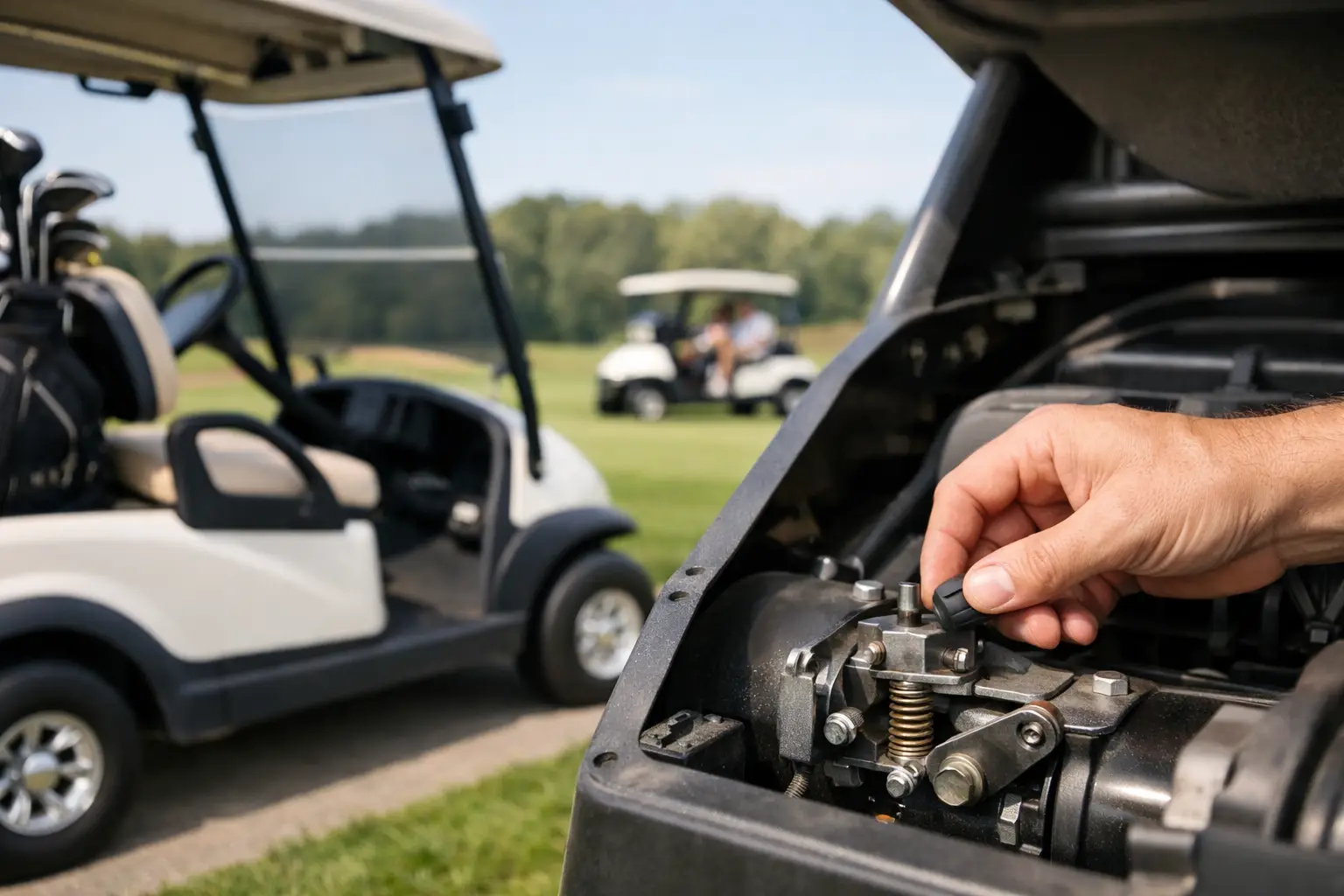
You press the pedal, the cart feels smooth, quiet, and easy to control - but then you hit a speed ceiling and start wondering: do electric golf carts have governors? Sometimes yes, sometimes not in the way most buyers think. That matters if you want a cart for neighborhood cruising, gated community use, or a little more pep than your old course cart ever had.
The short answer is this: many electric golf carts do have some form of speed limiting, but it is often handled by the controller, motor programming, gearing, or a factory setting rather than a traditional governor like people associate with gas engines. So if you're comparing carts, shopping for an upgrade, or thinking about modifications, it helps to know what is actually controlling speed and what your options really are.
Do electric golf carts have governors or speed limiters?
In casual conversation, people use the word governor to mean anything that keeps a golf cart from going faster. Technically, that is not always accurate. On a gas golf cart, a governor is usually a mechanical device that regulates engine speed. On an electric golf cart, speed is more commonly managed through electronic controls.
That means the answer to do electric golf carts have governors is often yes in practice, but not always as a standalone mechanical governor. Instead, the cart may rely on an electronic speed controller, programmed RPM limits, throttle mapping, battery voltage, and gear ratio to cap performance.
For most personal-use buyers, the takeaway is simple. If an electric cart tops out at a certain speed, there is almost always a reason built into the system. It is not usually random, and it is not always something you should bypass without understanding the trade-offs.
How electric golf cart speed is actually controlled
The controller is the biggest piece of the puzzle. It takes input from the accelerator and tells the motor how much power to deliver. Manufacturers can program that controller to prioritize smooth starts, battery efficiency, safety, or higher top speed.
Battery setup matters too. A 48V system and a 72V system will not behave the same way, even before you get into motor tuning. Higher voltage can support stronger performance, but the full result depends on how the motor, controller, and drivetrain are matched.
Tire size also changes real-world speed. Larger tires can increase top speed slightly, while also affecting torque and acceleration. Then there is rear gearing, which can favor climbing power or speed depending on the setup. This is why two carts with similar published specs can feel very different on pavement.
Why manufacturers limit speed in the first place
There is a good reason most stock carts are not set up to run as fast as possible. Safety comes first. Golf carts have a different footprint, suspension feel, and braking profile than a car, and a poorly matched high-speed setup can feel unstable fast.
There is also the question of where the cart will be used. Some communities, resorts, and private properties have speed expectations or local rules. In many cases, manufacturers tune carts to meet common use cases, preserve range, and reduce wear on components.
That does not mean every speed-limited cart is underpowered. A well-built electric cart can feel responsive, comfortable, and fun at neighborhood-friendly speeds. In fact, many premium personal-use models are designed to deliver a better ownership experience, not just a higher number on paper.
The difference between gas and electric governors
This is where a lot of confusion starts. On gas carts, the governor is often a physical or mechanical system connected to the engine and throttle behavior. People have been adjusting those for years, sometimes with mixed results.
Electric carts are different. There may be no simple governor screw or cable to tweak. Instead, the speed limit may come from software settings, controller parameters, a motor configuration, or the electrical architecture of the vehicle.
That is why advice that works for a gas golf cart may not apply to an electric one. If someone says, just remove the governor, that can be misleading. On many electric models, there is no single part you pull off and suddenly gain safe, reliable speed.
Can you make an electric golf cart go faster?
Yes, in many cases you can. But whether you should depends on the cart, the intended use, and how the upgrades are done.
Some carts can gain speed through controller upgrades, motor changes, higher-voltage systems, tire adjustments, or manufacturer-approved programming. Others are already optimized close to their intended design range, so pushing them harder can reduce battery life, strain components, or create handling issues.
This is the part that matters most for buyers. Speed upgrades are not just about speed. They can affect braking, ride quality, warranty coverage, and reliability. A cart that feels great for family cruising should not be turned into something twitchy or overworked just to chase a few extra miles per hour.
If you want stronger performance from day one, it often makes more sense to shop for a cart that was built for that use case. Premium electric carts with higher-speed capability, better suspension, upgraded brakes, and street-oriented features tend to be a smarter long-term buy than trying to force an entry-level cart into a role it was never designed to fill.
When speed limiting is actually a good thing
Not every buyer wants the fastest cart on the lot. A lot of homeowners, retirees, and family buyers want easy operation, predictable acceleration, and enough speed for neighborhood trips, community events, or local errands.
In those cases, speed limiting can be a feature, not a flaw. It can make the cart more comfortable for new drivers, easier to control around kids and pets, and more practical in tight community settings. It can also help preserve battery range, which matters if you want more time driving and less time charging.
There is also a comfort factor. The best carts are not just quick. They are balanced. A smooth, planted ride at the right speed often beats a nervous ride at a higher speed.
What buyers should ask before choosing a cart
If speed matters to you, ask how the cart achieves its performance. Do not stop at the top-speed number. Ask whether that speed is factory-set, whether it is street-use friendly, what kind of motor and controller the cart uses, and whether the braking and suspension are matched to that setup.
You should also ask how your local use affects the decision. Are you driving in a gated community, on private property, through a resort area, or in a neighborhood where low-speed vehicle rules may come into play? The right answer for a golf course path is not always the right answer for paved residential cruising.
This is also where buying from a dealership that understands electric carts makes a difference. A strong dealer can help you choose a cart that fits your lifestyle instead of leaving you to sort through generic specs and guesswork. For many shoppers, that saves time, avoids expensive mistakes, and gets them into a better cart the first time.
Do electric golf carts have governors on all models?
No. Not all models use the same method to limit or manage speed, and some premium personal-use carts are built to deliver higher performance from the factory. That is why broad one-size-fits-all answers rarely help.
One brand may use conservative controller programming. Another may pair a higher-output system with larger wheels, upgraded brakes, and a more road-ready design. Two carts can both be electric and still have very different driving personalities.
If you are replacing an older cart, this difference can feel dramatic. Newer models often offer more refined acceleration, better features, stronger battery systems, and more practical speed for everyday lifestyle use. At EV Superstore, that is exactly why many buyers move from basic utility-style carts into better-equipped personal-use models that feel more premium from the first drive.
The smartest way to think about speed
A better question than do electric golf carts have governors is this: what kind of speed control does this cart use, and is it right for how I plan to drive it? That puts the focus where it belongs - on safety, quality, comfort, and real-world performance.
If you want a cart for relaxed neighborhood trips, a well-tuned stock setup may be exactly right. If you want more speed, make sure the entire vehicle is built to support it, not just the motor. The best ownership experience usually comes from buying the right platform upfront, not trying to outsmart the engineering later.
The right electric golf cart should feel easy, capable, and fun every time you use it. When speed, stability, and quality are working together, that is when a cart stops feeling like a compromise and starts feeling like something you actually look forward to driving.