
Golf Cart Dealer vs Marketplace: Which Fits?
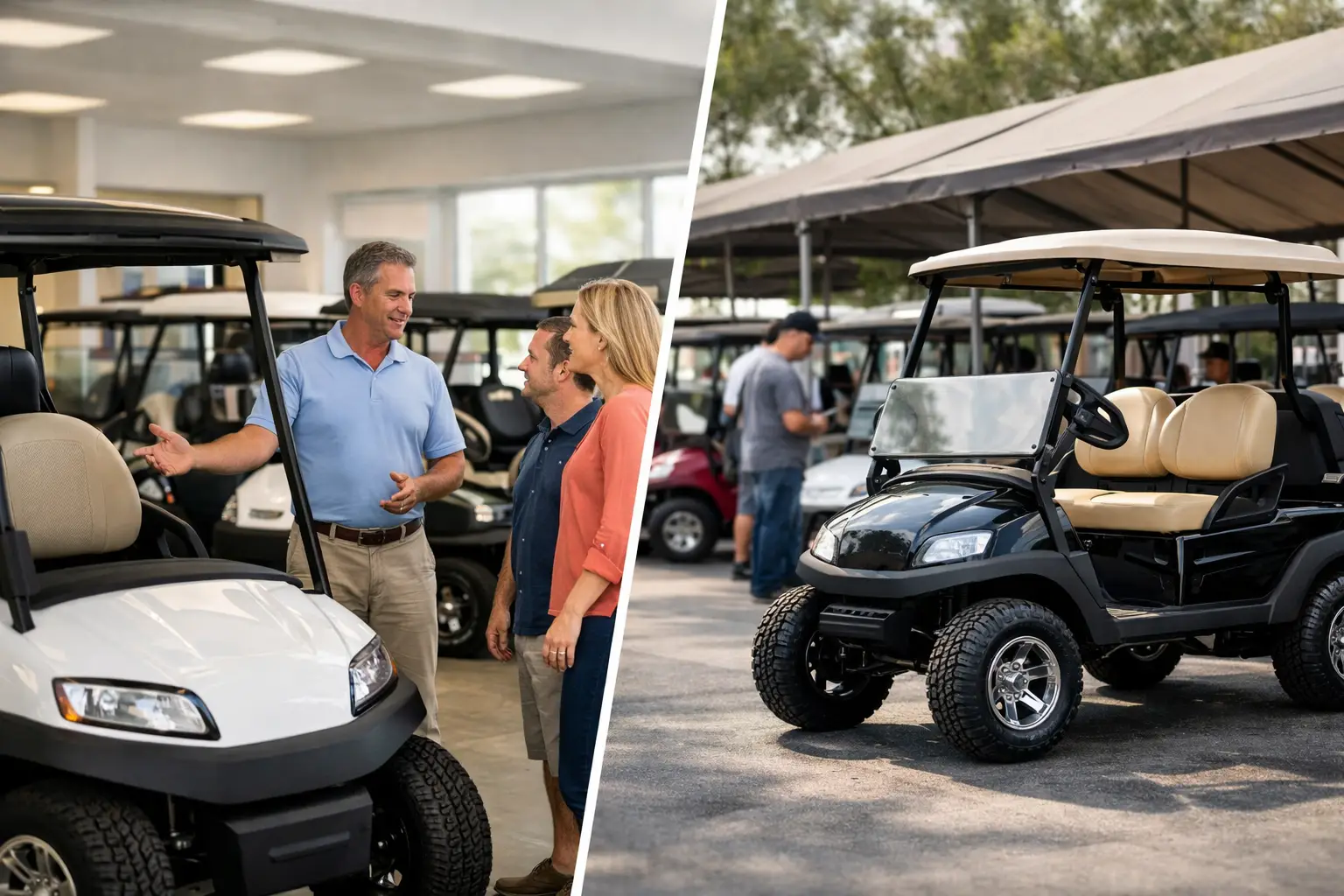
A low price can look great until the cart arrives with unclear warranty coverage, no local support, and a battery issue that becomes your problem. That is the real decision behind a golf cart dealer vs marketplace purchase. You are not simply choosing where to click “buy.” You are choosing how much help, accountability, and confidence comes with the vehicle.
For buyers planning to cruise their neighborhood, move around a golf community, carry family and friends, or enjoy a resort-area lifestyle, the right cart should feel exciting on day one and easy to own afterward. A marketplace can have a place in your search. A specialized dealer can offer a different level of guidance and support. Here is how to decide which route makes sense for you.
Golf Cart Dealer vs Marketplace: The Core Difference
A marketplace is a broad selling platform that connects shoppers with individual sellers, dealers, or third-party vendors. It can be useful for comparing a large number of listings quickly, including used carts, private-party sales, and models located across the country. The experience, however, can vary dramatically from one listing to the next.
A golf cart dealer is built around the vehicle purchase itself. A quality dealer curates inventory, understands the brands it carries, helps match a cart to your use, and remains available after delivery. That often includes financing options, warranty guidance, service support, accessories, trade-in conversations, and coordination for delivery.
Neither path is automatically right for every buyer. If you are a skilled DIY owner hunting for a project cart and comfortable inspecting it yourself, a marketplace may uncover a deal. If you want a new, feature-rich electric cart with a clear path to financing, service, and warranty help, a dealership is usually the stronger fit.
Comparing the Upfront Price - and the Real Cost
Marketplace listings often win attention with a lower advertised number. But the listed price is not always the final price. You may need to account for freight, assembly, documentation, taxes, accessories, charger compatibility, replacement keys, title paperwork where applicable, and repairs that were not obvious in photos.
With a dealer, transparent pricing should make the full purchase easier to understand. You can ask what is included, whether the cart is assembled and inspected, what accessories are already installed, and what delivery will look like. A higher initial number may include real value: upgraded seating, lights, mirrors, a backup camera, Bluetooth speakers, larger wheels, a charger, or a warranty-backed vehicle that is ready to enjoy.
The best question is not, “Which option has the lowest price?” Ask, “What will I actually spend to get a safe, usable, dependable cart in my driveway?” That is where a seemingly inexpensive marketplace purchase can become less attractive.
Used-cart bargains require a closer look
A used cart can be a smart buy, especially when you know its history and can inspect it in person. The challenge is that golf carts can hide costly problems. Battery condition, charger performance, suspension wear, brake operation, steering play, corrosion, tire age, and modifications all matter.
Photos rarely tell the complete story. A cart that looks clean may have aging lead-acid batteries, nonstandard wiring, or parts that are difficult to source. If you buy used through a marketplace, plan to inspect the cart thoroughly or pay a qualified technician to do it. The savings should be large enough to justify the added uncertainty.
Financing Is Usually Easier Through a Dealer
Many shoppers do not want to tie up cash in a premium personal-use electric vehicle. Dealer financing can make a newer, better-equipped cart more attainable through manageable monthly payments, subject to approval. A dealership may also work with lenders that serve a range of credit profiles and can help you understand terms before you commit.
Most marketplace sellers cannot offer that same experience. A private seller typically expects payment in full, and arranging a personal loan is left to the buyer. Some marketplace vendors do offer financing, but you will want to verify who is handling the transaction, how the application works, and whether the advertised payment reflects the actual terms available to you.
Financing is not just about getting approved. It is about buying the cart that fits your life without cutting corners on seating, safety features, range, or quality.
Warranty and Service Can Change the Ownership Experience
A marketplace transaction may end the moment you take possession. If an issue appears later, your options depend on the seller, any remaining manufacturer warranty, and whether you can find service nearby. “As-is” is common with used listings, and it means exactly what it says.
A dealer should explain the warranty before the sale, including what is covered, how long coverage lasts, and what steps to take if something needs attention. That matters with modern electric carts, where batteries, controllers, charging systems, and electronic accessories deserve knowledgeable support.
Service access is equally important. You may only need routine maintenance, but you will appreciate a relationship with a team that knows your vehicle if you need diagnostics, replacement parts, tires, accessory installation, or warranty assistance. EV Superstore is designed around that full ownership experience, not just handing over a set of keys.
Ask these questions before paying
Whether you buy from a dealer or a marketplace seller, get clear answers to these five questions:
- Is the cart new, used, rebuilt, or previously titled?
- What warranty applies to the vehicle, batteries, and major components?
- What is included in the advertised price, including the charger and installed accessories?
- Who handles service or repairs after delivery?
- What are the delivery, return, and damage-claim procedures?
A seller who answers directly is easier to trust. If the responses are vague, inconsistent, or only verbal, keep shopping.
Inventory and Customization: Breadth vs. Guidance
Marketplaces can show hundreds of carts in one search. That variety is helpful when you are comparing colors, seating capacity, body styles, and price ranges. The downside is information overload. Listings can use inconsistent descriptions, outdated availability, or photos that do not match the exact cart for sale.
A multi-brand dealership narrows the field in a useful way. Instead of sorting through every cart online, you can compare models selected for performance, features, and ownership value. A knowledgeable sales team can help answer practical questions: Do you need four seats or six? Will the cart handle hills? Is a lifted setup right for your community? Do you need street-legal equipment based on local rules? Is lithium power worth it for your usage?
Customization also tends to be more straightforward through a dealer. You can choose a color, seating configuration, wheels, sound system, enclosure, storage solution, or other upgrades with a clearer understanding of fitment and installation. That is a better path than buying accessories separately and hoping they work together.
Delivery, Test Drives, and the Confidence Factor
A local dealer gives you the advantage of a test drive. You can feel the ride quality, check seat comfort, see the color in person, and make sure the cart fits your family. For a purchase that may become part of your daily routine, that hands-on experience has real value.
Nationwide buyers can still get a confident dealership experience when the process is organized. Ask for current photos or video of the exact vehicle, a complete feature list, transparent paperwork, delivery timing, and a clear point of contact. Remote buying works well when the seller treats communication as part of the product.
Marketplace delivery is more variable. Some listings require pickup, while others rely on third-party freight with limited coordination. Before placing a deposit, confirm who is responsible if the cart is damaged in transit, when ownership transfers, and how you will document its condition upon arrival.
When a Marketplace Makes Sense
A marketplace may be the better choice if you are seeking a very specific older model, shopping strictly for a low-cost project, or buying from a trusted local seller whose cart you can inspect carefully. It can also be a useful research tool for understanding typical prices in your area.
Just treat every listing as its own transaction. Verify the seller, inspect the cart, review the serial number and ownership documents, and avoid sending money before you have clear terms. A great deal should still come with enough information to make an informed decision.
When a Dealer Is Worth It
Choose a dealer when you want a ready-to-drive cart, access to multiple brands, straightforward financing, warranty protection, delivery coordination, and help after the sale. It is especially valuable for buyers who want modern features and do not want to spend weekends troubleshooting batteries or chasing down parts.
The right cart should add more freedom to your week, not another repair project to your calendar. View the vehicle in person if you can, ask direct questions if you are buying remotely, and choose the seller that makes ownership feel as easy as the first ride around the neighborhood.