
How Fast Do Electric Carts Go? Speed Explained
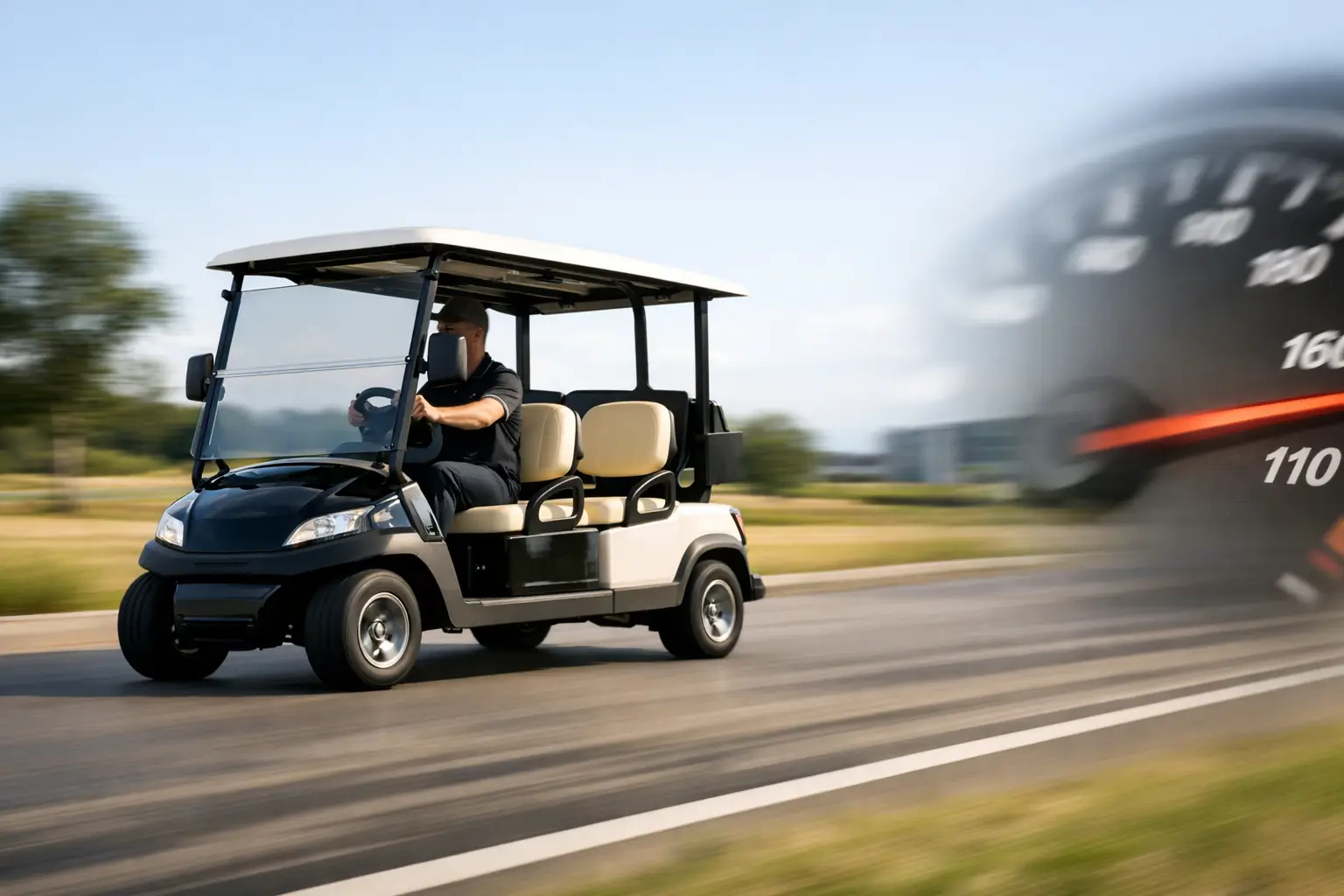
A cart that tops out at 14 mph can feel perfectly fine on the golf course and painfully slow on a long neighborhood loop. So, how fast do electric carts go? Most personal-use electric carts reach about 19 to 25 mph, while standard golf-course models often run closer to 12 to 15 mph. Some performance-focused and street-ready models can go faster, but the right answer depends on the cart, its setup, and where you plan to drive it.
For homeowners, retirees, families, and community cruisers, speed is not just a spec on a brochure. It shapes how confidently you merge through a large neighborhood, keep up with friends, carry passengers, and enjoy the ride. Here is what to expect before choosing your next electric cart.
How Fast Do Electric Carts Go in Real Life?
Electric cart speed generally falls into three practical categories. Traditional golf carts are commonly governed around 12 to 15 mph. They are built for golf paths, short distances, and controlled environments where a relaxed pace makes sense.
Personal-use carts, often called neighborhood electric carts or recreational carts, commonly deliver 19 to 25 mph. This is the range many buyers want for getting around a master-planned community, a resort property, a campground, or a large piece of land. At 20-plus mph, a cart feels meaningfully more capable without turning a casual cruise into a white-knuckle ride.
Higher-speed configurations can exceed 25 mph, depending on the model and modifications. That does not automatically make them the best choice. More speed can be fun, but it also calls for more attention to braking, tire condition, passenger behavior, local rules, and the terrain you use every day.
A speedometer reading is not the whole story
Top speed is usually measured under favorable conditions: a charged battery, level pavement, appropriate tire pressure, and a lighter load. Add four adults, a full cooler, hills, soft grass, or a low battery, and the cart may not hold that number.
That is normal. The better question is whether the cart has enough power to maintain a comfortable pace during the way you actually plan to use it. A well-equipped cart that pulls smoothly up a neighborhood hill can be more enjoyable than a faster cart that feels strained with passengers aboard.
What Determines an Electric Cart's Top Speed?
The motor, battery system, controller, gearing, tires, and programming all work together. A powerful motor alone does not guarantee a quick cart. The system has to deliver power efficiently and safely.
Lithium battery carts often provide a strong, consistent driving feel because they maintain voltage well as the battery discharges. Compared with older lead-acid setups, lithium can also reduce weight and shorten charging downtime. That can improve real-world performance, especially for drivers who use their carts frequently.
The controller is another major factor. It regulates how power moves from the battery to the motor. Manufacturers may program controllers for a modest golf-course speed, a neighborhood-friendly speed, or a higher-performance setup. This is why two carts with similar-looking specs can feel very different from the driver’s seat.
Tire size matters as well. Larger tires can increase potential top speed, but they may also affect torque, steering feel, braking distance, and ride height. A lift kit and oversized tires look sharp, especially on a customized cart, but they should be matched to the vehicle’s suspension and intended use. Style is part of the experience. So is stable, predictable handling.
Why the Fastest Cart Is Not Always the Best Cart
A 25 mph cart can be a great fit for a sprawling community with smooth streets and longer routes. For a tight resort property, a waterfront neighborhood with busy pedestrian paths, or a household with younger passengers, a lower speed may be the smarter choice.
Think about your typical trip. Are you making a quick run to the clubhouse, traveling a mile to visit neighbors, hauling beach gear, or taking the grandkids around the community? Speed should support the trip, not overpower it.
Comfort features deserve just as much attention as mph. Quality seats, good suspension, headlights, turn signals, mirrors, seat belts, backup cameras, and a clear display all make regular driving better. Premium carts are not only about getting there faster. They are about making every ride easier and more enjoyable.
Hills, payload, and terrain change the equation
Flat pavement is forgiving. Steep driveways, bridges, sandy paths, wet grass, and uneven terrain are not. If your property has hills or you routinely carry four to six people, look beyond the advertised top speed. Ask about hill-climbing ability, payload capacity, battery range, brake performance, and suspension.
A cart that is quick on level ground but loses momentum on grades can become frustrating fast. Conversely, a properly configured cart with adequate torque may feel more confident even if its top speed is slightly lower.
Street-Legal Rules Can Limit Where and How Fast You Drive
Many buyers use the term “street legal” to describe a cart equipped with road-use features, but the rules vary by state, county, and city. In some areas, low-speed vehicles are allowed on roads with posted limits up to a certain threshold, often 35 mph. In others, local ordinances determine whether golf carts can use neighborhood streets or designated paths.
The vehicle’s speed capability is only one piece of the puzzle. Registration, insurance, a VIN, headlights, brake lights, turn signals, mirrors, a windshield, seat belts, and a horn may be required depending on where you drive. Your community may also have its own rules.
Before purchasing, check the road access rules for your exact area. This is especially valuable for buyers in Texas, Florida, California, and resort communities where cart use is common but local regulations can differ block by block. A knowledgeable dealer can help you choose features that fit your intended use, but local authorities have the final word.
Can You Make an Electric Cart Go Faster?
In some cases, yes. Speed upgrades may involve changing the controller settings, installing a different motor, upgrading the battery system, modifying gearing, or changing tire size. However, an upgrade should never be treated as a simple shortcut.
Increasing speed can affect range, motor temperature, braking needs, suspension wear, warranty coverage, and legal classification. It can also make a cart less stable if the chassis, steering, and tires were not designed for the new performance level. A modification that sounds minor online can create expensive problems when it is not engineered as a complete system.
The safest approach is to start with a cart built for the speed and use case you want. If you expect regular 20 to 25 mph neighborhood driving, choose a model designed for that range from day one. You will get a better driving experience, clearer warranty support, and fewer compromises than trying to turn a basic golf cart into something it was never meant to be.
How to Choose the Right Speed for Your Lifestyle
For golf-course use and short private-property trips, 12 to 15 mph is usually sufficient. For neighborhood transportation, community events, and everyday cruising, 19 to 25 mph is the practical sweet spot for many owners. If you are shopping for a larger property, more demanding terrain, or a more energetic ride, focus on the entire performance package rather than chasing the highest number.
Take a test drive with the people and gear you expect to carry. Pay attention to acceleration, braking, seat comfort, turning radius, visibility, and how the cart responds over bumps. Ask how speed changes with a full passenger load and what charging routine fits your driving habits.
At EV Superstore, the goal is to make that decision straightforward, whether you want a polished neighborhood cruiser, a feature-loaded family cart, or a more capable personal vehicle. The right cart should feel exciting when you press the pedal and dependable when you use it every day. Choose the speed that fits your streets, your passengers, and the kind of adventures you plan to make routine.