
How to Maintain Electric Cart Batteries
A cart that feels slow off the line, loses range halfway through the neighborhood, or struggles after sitting for a week usually has a battery care problem before it has a battery failure problem. If you want to know how to maintain electric cart batteries, the good news is that the basics are simple. A few consistent habits will protect performance, stretch battery life, and help you avoid the kind of surprise replacement bill nobody wants.
For most owners, battery maintenance comes down to three things - charging correctly, keeping the battery area clean, and avoiding long periods of neglect. The details vary depending on whether your cart uses lead-acid batteries or lithium batteries, and that distinction matters more than most people realize.
Why battery maintenance makes such a big difference
Your battery pack is the heart of your electric cart. It affects range, acceleration, charging time, and overall reliability. When batteries are cared for properly, your cart is ready when you are, whether that means a quick run through the neighborhood, a loop around the golf community, or an all-day cruise with the family.
When maintenance gets skipped, the symptoms build slowly. You may notice shorter run time, weaker hill-climbing power, longer charging sessions, or inconsistent performance from one trip to the next. Some owners assume this means the cart is getting old, but often the real issue is undercharging, over-discharging, corrosion, or improper storage.
That is why good battery care is less about doing complicated service and more about avoiding preventable wear.
Know your battery type before you do anything else
The first step in how to maintain electric cart batteries is knowing what is actually installed in your cart. Most personal-use electric carts today run either flooded lead-acid batteries, AGM batteries, or lithium batteries.
Flooded lead-acid batteries need the most hands-on attention. They require proper charging, regular water checks, and clean terminals. AGM batteries are more sealed and lower maintenance, but they still need correct charging habits and storage care. Lithium batteries are the easiest to live with in day-to-day ownership, but they are not maintenance-free in the sense that you can ignore charging practices or temperature considerations.
If you are not sure which type you have, check the battery labels or your owner documentation. Using the wrong charger settings or following the wrong maintenance routine can shorten battery life fast.
Charge the cart the right way
Bad charging habits are one of the fastest ways to wear out a battery pack. The best routine for most owners is to charge the cart after use rather than letting it sit partially discharged for days.
With lead-acid batteries, this is especially important. Leaving them in a low state of charge encourages sulfation, which reduces capacity over time. In plain English, the battery starts holding less energy and delivering less performance. If you use your cart several times a week, plugging it in after each outing is usually the safest play.
Lithium batteries are more forgiving, but they still perform best with a consistent routine. You do not need to obsess over every percentage point, yet you should avoid regularly draining them to empty. Repeated deep discharge creates unnecessary stress, even on better battery systems.
Also, use the charger designed for your battery pack. This is not the place to improvise. Voltage, charging profile, and battery chemistry all need to match. A wrong charger can undercharge, overcharge, or create heat that damages the pack.
Avoid these common charging mistakes
A lot of battery problems start with habits that seem harmless. Leaving the cart unplugged for weeks, using an extension cord that is too light-duty, interrupting charging constantly, or parking the cart with the batteries nearly dead are all avoidable mistakes.
Heat matters too. Charging in a hot garage is not always a deal-breaker, but extreme temperatures put more stress on batteries. If possible, charge in a dry, ventilated area out of direct sun.
Check water levels if you have lead-acid batteries
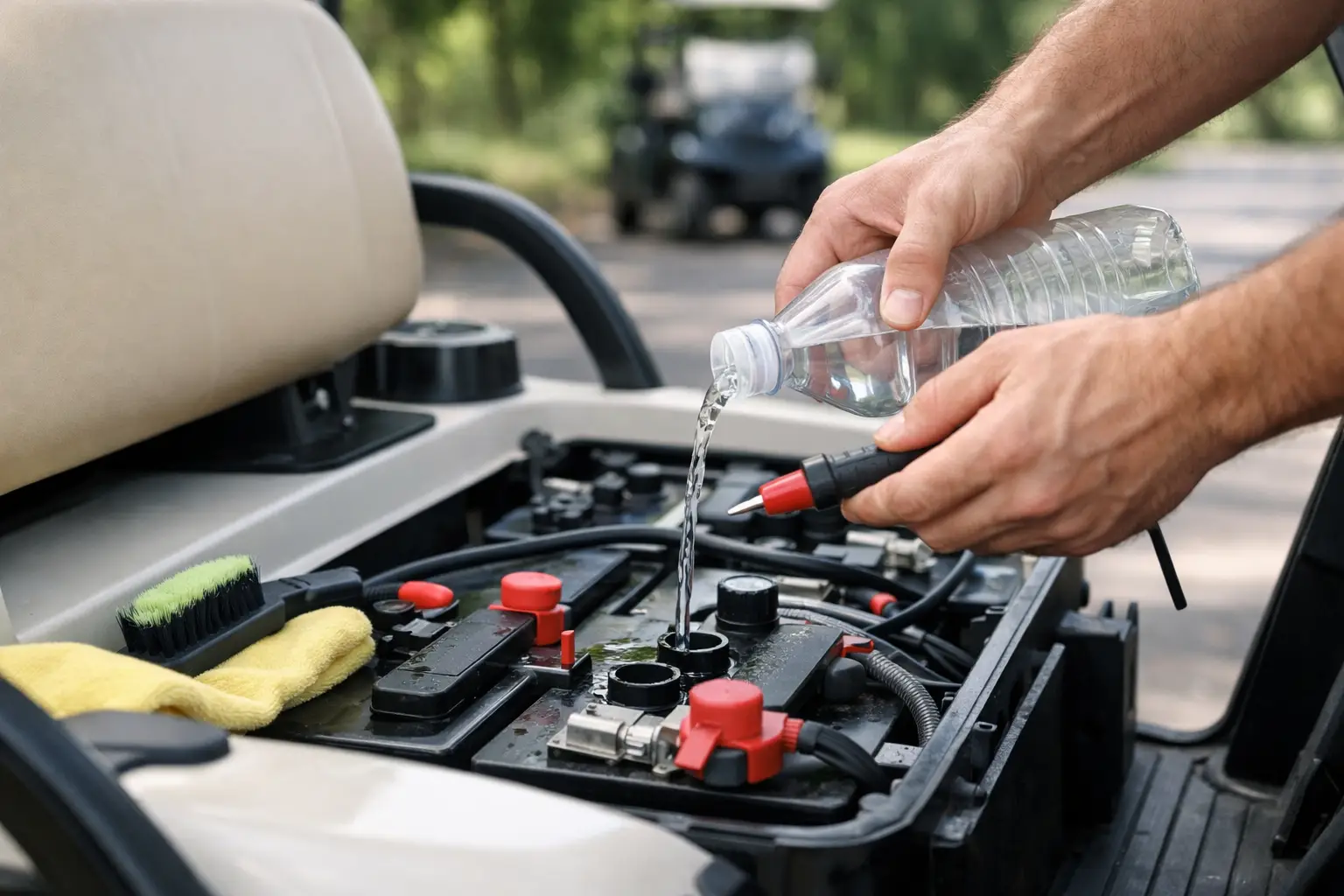
If your cart has flooded lead-acid batteries, water maintenance is part of the job. These batteries lose water during normal charging, and low water levels can expose the plates inside the battery. Once that happens, damage can occur quickly.
Check water levels regularly, especially during hotter months or periods of frequent use. For many owners, once a month is a smart starting point, though heavy use may call for more frequent checks. Only add distilled water, never tap water, because minerals in tap water can hurt battery performance.
Timing matters. In most cases, water should be checked after charging, not before, because charging changes the fluid level. Fill to the recommended level, not to the very top. Overfilling can cause overflow during charging, which creates a mess and increases corrosion risk.
If your cart has AGM or lithium batteries, skip this step. Those battery types do not need watering.
Keep terminals and cables clean
Battery corrosion looks minor until it starts interfering with performance. White, blue, or green buildup around terminals can reduce electrical contact and create resistance. That means wasted energy, harder charging, and less dependable power delivery.
Inspect the battery terminals and cable connections every few weeks. If you see corrosion, clean it carefully and make sure the cart is powered off first. A soft brush and a battery-safe cleaner or a simple baking soda solution can help remove buildup on lead-acid systems, but be careful not to let cleaning solution enter the battery cells.
Once everything is clean, check that connections are tight. Loose cables can create heat and voltage drop. Tight does not mean overtightened, though. You want secure connections without damaging the terminal hardware.
Don’t let the cart sit neglected
One of the biggest battery killers is inactivity. Plenty of owners use their cart heavily in season, then let it sit for a month or two with little attention. That is when batteries quietly lose charge and age faster than expected.
If you are storing the cart, fully charge the batteries first. For lead-acid batteries, continue charging at the recommended intervals during storage so they do not sit discharged. For lithium, follow the battery maker's storage guidance, since some systems prefer partial charge for long-term storage rather than sitting at 100 percent for months.
This is one of those it-depends situations. The right storage charge level varies by battery type and battery management system. If you are unsure, follow the battery manufacturer's instructions instead of guessing.
Storage conditions matter
A clean, dry garage beats an exposed carport every time. Moisture encourages corrosion, and extreme heat or freezing temperatures can shorten battery life. If you live in a climate with intense summer heat, battery care needs to be more proactive. If your winters are cold, never assume the cart can just sit untouched until spring.
Even during storage, check the pack periodically. A quick look can catch swelling, leaks, corrosion, or charger issues before they turn into expensive repairs.
Drive with battery life in mind
How you use the cart affects battery wear too. Hard acceleration, repeated deep discharge, overloading the cart, and constant hill climbing all put more demand on the battery pack. That does not mean you need to baby your cart. It means smart use helps your batteries last longer.
If your cart starts feeling weak near the end of every ride, do not keep pushing it until it is completely drained. Recharge it sooner. Running a pack down to the bottom on a regular basis is tough on battery health, especially with lead-acid setups.
Tire pressure also plays a role. Underinflated tires create more rolling resistance, which makes the motor and battery work harder. It is a small maintenance detail that can have a real effect on range.
How to maintain electric cart batteries through regular inspections
A simple monthly inspection can save a lot of trouble. Look for cracked battery cases, corrosion on terminals, frayed cables, loose hold-downs, or any sign of overheating. Pay attention to changes in range and charging time too. Those performance shifts often show up before a battery fully fails.
If one battery in a lead-acid pack is consistently weak, the entire pack can suffer. Replacing one battery in an older set may seem like the cheaper move, but it often creates imbalance and uneven performance. Sometimes the better long-term decision is replacing the full set.
With lithium batteries, electronic management systems add protection, but they are not magic. If the cart stops charging properly or range drops unexpectedly, have the system checked instead of assuming it will sort itself out.
When it is time to call for service
There is a difference between routine upkeep and electrical troubleshooting. If your charger is not kicking on, the batteries are heating up excessively, the cart has a major range drop, or you see physical battery damage, it is time for professional service.
This is especially true for owners who want dependable, ready-to-drive performance and do not want to gamble with electrical components. A qualified service team can test voltage, load performance, cable condition, and charger function to pinpoint the real issue instead of replacing parts blindly.
For buyers who want easy ownership from day one, choosing a cart backed by proper service support matters just as much as choosing the right style, speed, and features. That is part of what makes premium ownership feel premium.
Battery care is not complicated, but it does reward consistency. Charge on time, keep everything clean, store the cart properly, and pay attention before small issues turn into expensive ones. Do that, and your cart will spend more time cruising and less time waiting on a charger.