
Street Legal Neighborhood Electric Cart Guide
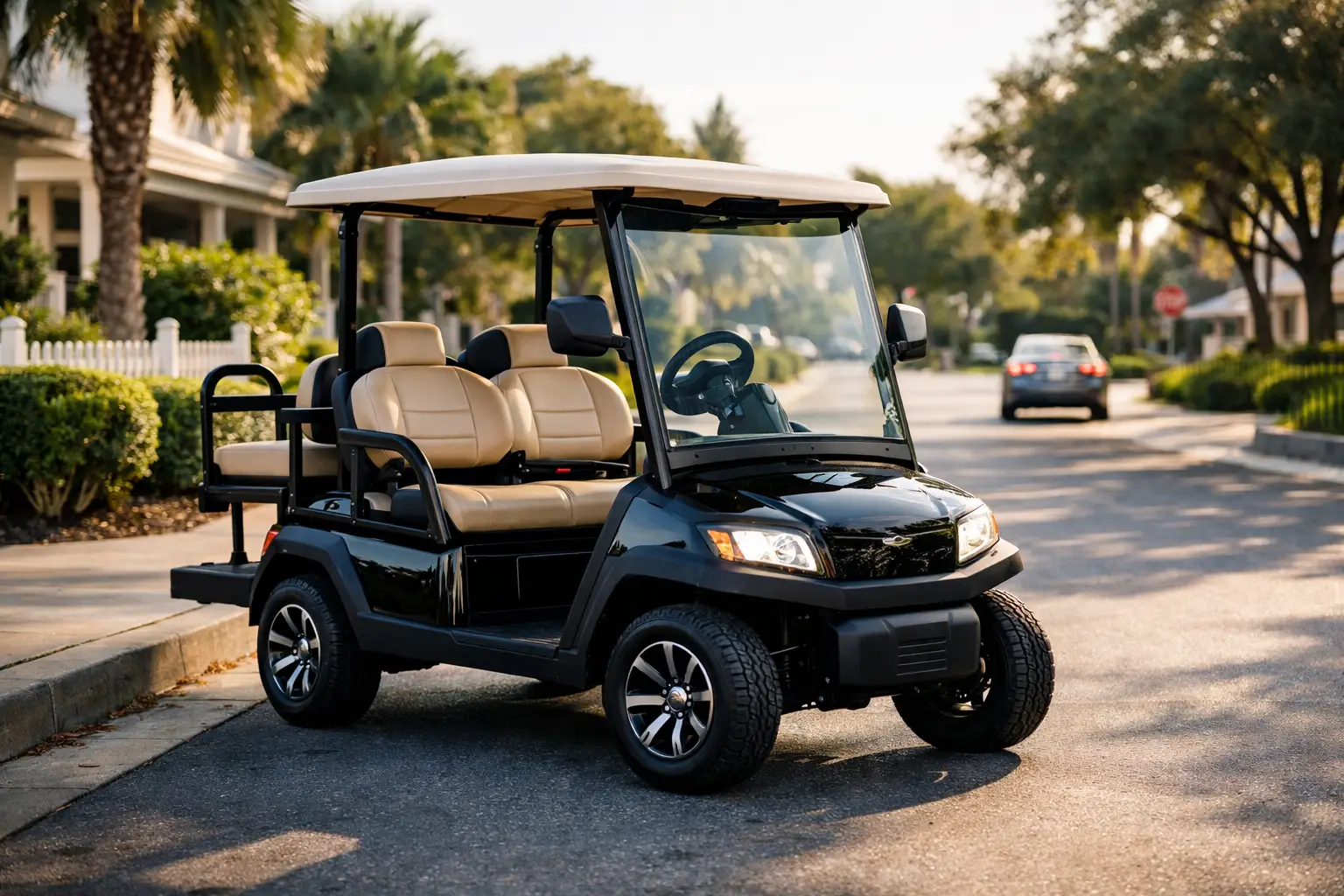
That quick trip to the mailbox, pool, clubhouse, marina, or your neighbor’s driveway does not need a full-size SUV. A street legal neighborhood electric cart gives you a smarter way to move through the places you actually spend time - with lower operating costs, easier parking, and a lot more fun built into the ride.
The catch is that not every electric cart is ready for public roads, and not every buyer needs the same setup. Some shoppers want a simple runabout for a gated community. Others want four forward-facing seats, upgraded wheels, a backup camera, premium lighting, and enough speed to keep up with neighborhood traffic. If you want to get it right the first time, it helps to know what “street legal” really means, where these carts fit best, and which features are worth paying for.
What Is a Street Legal Neighborhood Electric Cart?
A street legal neighborhood electric cart is a low-speed electric vehicle designed for use on certain public roads, usually in communities where lower speed limits make this kind of transportation practical. Think master-planned neighborhoods, beach towns, golf communities, resort areas, and suburban pockets where a two-mile errand is more common than a twenty-mile commute.
The key phrase there is certain public roads. Street legal does not mean highway legal, and it does not mean you can drive anywhere a regular car can go. In most cases, these vehicles are intended for roads with lower posted speed limits and must meet equipment requirements before they can be driven legally.
That distinction matters because plenty of carts look the part but are still built only for private property use. A good-looking cart with premium seats and big wheels is not automatically road-ready. If you plan to use it beyond the neighborhood path or golf course, legality should be one of the first questions you ask, not the last.
What Makes a Neighborhood Electric Cart Street Legal?
If you are shopping for a street legal neighborhood electric cart, the basics usually start with required safety equipment. Depending on the vehicle class and your state or local rules, that often includes headlights, taillights, brake lights, turn signals, mirrors, seat belts, a horn, a windshield, reflectors, and a vehicle identification number. Many buyers are surprised to learn that appearance upgrades and legal equipment are two completely different things.
Speed matters too. Neighborhood electric vehicles typically fall into the low-speed category, which usually means they are built to operate within a specific speed range and on roads with lower speed limits. That is part of what makes them ideal for local cruising and short daily trips, but it is also why they are not one-size-fits-all transportation.
Registration, title, insurance, and local ordinances can also come into play. State law may say one thing while your city, county, or community association adds another layer. That is why a dealership with real experience in these vehicles is so valuable. You do not want to guess your way through a purchase and find out later that your cart needs upgrades, paperwork, or restrictions you did not plan for.
Street legal does not mean overbuilt
A lot of buyers assume road use means they need the biggest, fastest, most loaded model on the floor. Sometimes that is true. Sometimes it is wasted money. If your typical use is a one-mile ride to dinner, a community event, or the neighborhood pool, your ideal cart may be focused more on comfort, visibility, and reliability than aggressive performance.
On the other hand, if you carry family, groceries, beach gear, or guests on a regular basis, stepping up to a larger, better-equipped model makes sense fast. The best choice depends on where you drive, how often you use it, and how many people ride with you.
Why Buyers Are Upgrading to a Street Legal Neighborhood Electric Cart
Convenience is the obvious reason, but it is not the only one. These carts fit the way people actually live in many communities. They are easy to hop into, easy to park, and far more enjoyable for short local trips than firing up a full-size vehicle every time you leave the house.
They also bring a lifestyle upgrade that buyers feel right away. Modern electric carts are not bare-bones utility vehicles anymore. Many come with premium seats, digital displays, Bluetooth audio, stylish lighting, lifted stances, aluminum wheels, backup cameras, and design touches that make them feel far more polished than older carts people remember from years ago.
For retirees, they offer freedom without the bulk of a car. For families, they create a simple way to move kids and gear around the neighborhood. For buyers in resort and coastal areas, they fit daily life better than a second car. And for homeowners in golf communities, they often become the vehicle that gets used most.
How to Choose the Right Model for Your Daily Use
Start with seating. Two-passenger carts work well for couples, solo errands, and lighter use. Four-passenger and six-passenger models make more sense if this will be the family cruiser or your go-to vehicle for visitors. It is usually better to buy for your real-world weekends than your average Tuesday.
Battery performance is another big one. If your use is casual and local, many buyers will be perfectly happy with a setup built around neighborhood range and dependable charging. But if you plan to drive often, cover larger communities, or carry more passengers and cargo, battery quality and drivetrain performance become a bigger part of the decision.
Ride quality should not be treated like a bonus. Suspension, tire size, seating comfort, and cabin layout all affect whether you love using the cart or slowly stop reaching for the key. A cart can check every box on paper and still feel wrong if the ride is harsh or the seating position is awkward.
Then there is equipment. Some features are practical from day one, like a backup camera, premium lighting, mirrors, and weather protection. Others are more about style. Both matter. This is a lifestyle purchase as much as a transportation purchase, so there is nothing wrong with wanting a cart that looks sharp in your driveway.
Where Street Legal Carts Make the Most Sense
A street legal neighborhood electric cart shines where trips are short, speed limits are lower, and daily routines stay close to home. That includes planned residential developments, lake communities, beach towns, retirement neighborhoods, mixed-use districts, and areas where golf cart culture is already part of everyday life.
If your regular destinations are within a few miles and the route does not require major roads, ownership usually feels easy and natural. If your daily driving depends on higher-speed traffic, longer distances, or limited legal access points, a cart may be more of a specialty vehicle than a true replacement for a second car.
That is not a drawback. It just means the right expectations matter. Buyers are happiest when the vehicle fits their environment from the start.
Buying From a Dealer vs. Buying Blind
This category has grown fast, and that has created a wide spread in quality. Some vehicles are genuinely well-equipped, properly supported, and ready for real ownership. Others look attractive online but leave buyers chasing service, parts, warranty answers, or missing compliance items after the sale.
Working with a dealership that understands street legal carts changes the experience. You can compare brands, ask direct questions about legal equipment, review financing options, and get clarity on warranty coverage and service support. That is especially helpful if you are buying remotely and want the confidence that the vehicle arriving at your home is the one you expected.
A strong dealer also helps you avoid paying for the wrong upgrades. Not every premium feature adds real value for every buyer. Some do. A good retail experience is not about pushing the most expensive model. It is about matching the vehicle to the way you plan to use it.
What to Ask Before You Buy
Before you commit, ask whether the cart is already equipped to meet street legal requirements for your area, or whether additional steps may be needed. Ask about top speed, charging time, battery type, warranty coverage, service availability, and parts support. Ask how the cart will be delivered and what ownership looks like after the sale.
If you are comparing brands, pay attention to the details you will notice every day. Seat comfort. Storage. Lighting. Visibility. Build quality. Ease of entry. Noise. Ride feel. Those are the things that turn a nice-looking vehicle into one you actually use all the time.
For many buyers, this is where EV Superstore stands out. Having access to multiple brands, financing options, service support, and home delivery makes the process a lot easier than piecing everything together on your own.
The right street legal neighborhood electric cart should feel simple before you buy it and even better after you bring it home. If it matches your roads, your routine, and your style, you will probably wonder why you waited so long to make the switch.