
Top Golf Cart Safety Features Worth Having
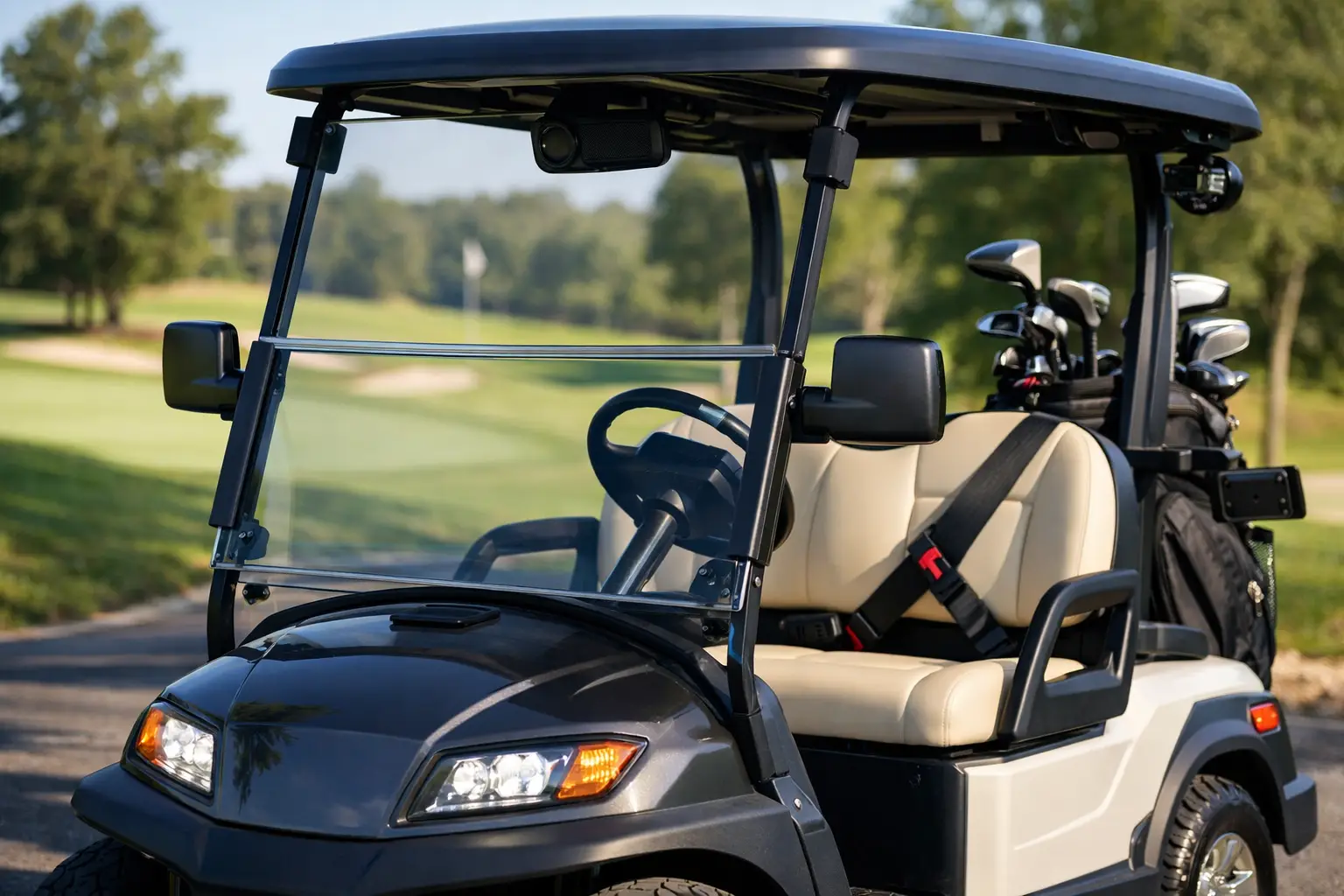
A modern personal-use golf cart can carry the kids to the pool, take neighbors to dinner, and make a quick run through the community feel like part of the fun. That is exactly why the top golf cart safety features deserve more attention than a flashy paint color or upgraded speakers. A great cart should feel exciting to drive, but it should also help the driver see clearly, stop confidently, communicate with others, and keep passengers secure.
For buyers using a cart beyond the golf course, safety equipment is not an afterthought. It is part of choosing a vehicle that fits the way your family actually moves through a neighborhood, resort, campground, or private property.
Start With Visibility: Lights, Signals, and Mirrors
The first safety question is simple: can other people see you, and can you see what is around you? A fully equipped cart should have bright LED headlights, taillights, brake lights, turn signals, and reflectors. LEDs provide a sharp, visible beam while using less energy than older lighting setups, making them a smart choice for early morning rides, sunset cruising, and cloudy-day travel.
Headlights are not just for driving after dark. They help drivers spot pedestrians, pets, curbs, potholes, and landscaping shadows when light is low. Taillights and brake lights give vehicles behind you a clearer warning that you are slowing down. Turn signals matter just as much when you share a community road or cross an intersection, especially when a hand signal may be hard for another driver to see.
Mirrors complete the visibility package. A center rearview mirror and properly positioned side mirrors reduce blind spots and make it easier to monitor traffic, cyclists, and faster-moving vehicles. For many personal-use owners, a backup camera adds another useful layer. It cannot replace checking mirrors and looking behind the cart, but it can reveal a child’s bike, a low bollard, or another obstacle that is difficult to spot from the driver’s seat.
Horns and Windshields Have a Job Too
A horn is a small feature with a big purpose. It gives you a quick way to alert a pedestrian, another cart driver, or a vehicle backing out of a driveway. Use it courteously, not aggressively, but make sure it works before every ride.
A DOT-approved or high-quality windshield can also improve safe operation by reducing wind, dust, light rain, and debris in the driver’s face. Depending on local rules and how the cart is used, a windshield may be required equipment. A folding windshield gives flexibility, but it should be securely latched and kept clean to avoid glare.
The Top Golf Cart Safety Features for Control
Safety starts before a cart begins moving. A stable chassis, quality suspension, properly sized tires, and dependable brakes work together to keep the ride predictable. These are less glamorous than custom wheels or premium seats, but they are the foundation of a cart you can trust.
Hydraulic disc brakes are a major confidence-builder on many newer carts because they offer strong, consistent stopping power. The right braking system depends on the cart’s weight, passenger capacity, tire size, and expected speed. A heavier lifted cart with four or six passengers needs more than a casual two-seat course cart that only travels at low speed on flat paths.
Look for a clearly marked parking brake as well. When parked on an incline, a cart should not be left to rely on luck or a quick stop. Engage the parking brake, turn the wheels appropriately when on a slope, and avoid parking where a rolling cart could enter a roadway or pedestrian area.
Speed is another area where buyers should think practically. Higher-speed electric carts can be a great fit for larger communities and approved road use, but more speed increases stopping distance and reduces reaction time. A speedometer helps drivers stay aware of their pace, while a state-of-charge display prevents an unexpected low-battery situation far from home. The best setup is not always the fastest one. It is the one that matches your route, local rules, and comfort level.
Seat Belts, Secure Seating, and Passenger Protection
If your cart will carry family members, friends, or grandchildren, passenger protection should be high on the list. Forward-facing seats with secure mounting, supportive seat backs, and designated seating positions help everyone stay in place during turns and stops. Rear-facing seats can be useful for extra capacity, but passengers should understand that they need to remain seated and keep hands and feet inside the vehicle.
Seat belts are among the most valuable features for carts used on streets or at higher speeds. They help prevent occupants from being thrown or shifting out of position during sudden braking, sharp turns, or a collision. Where seat belts are installed, every rider should use them correctly. Loose belts, damaged buckles, and improvised seating are not acceptable shortcuts.
For families, a simple rule makes a meaningful difference: one passenger per designated seating position. Do not allow children to sit on laps, stand on the rear step, ride in cargo areas, or hang onto the side of the cart. A golf cart may feel casual, but a quick turn can create real risk when someone is not properly seated.
Grab Handles and Entry Steps Matter
Grab handles give riders something secure to hold while entering, exiting, and traveling over uneven pavement. Non-slip entry steps can reduce slips, particularly after rain or around pools and marinas. These details are easy to overlook on the showroom floor, yet they make daily use safer and more comfortable for riders of different ages and mobility levels.
Tires, Suspension, and Stability on Real-World Routes
A cart that looks ready for adventure still has to handle your everyday terrain. Tires should be in good condition, inflated to the manufacturer’s recommended pressure, and suited to the surface you use most. Street-oriented tires are often quieter and smoother on pavement. All-terrain tires may provide more traction on grass, gravel, or unpaved property, but they can change ride feel and road noise.
Lift kits and oversized wheels add presence, and they can be appropriate for certain properties. The trade-off is that lifting a cart changes its center of gravity. That can make aggressive turns, steep side slopes, and uneven ground less forgiving. If you choose a lifted model, drive accordingly: slow down before turns, avoid sharp steering inputs, and do not overload the vehicle.
Independent front suspension can improve comfort and control over imperfect roads, speed bumps, and driveway transitions. It is especially appealing for buyers who plan to use their cart frequently beyond smooth golf paths. Still, no suspension system makes unsafe driving safe. Slow down on wet pavement, keep both hands available for steering, and avoid slopes that exceed the cart manufacturer’s guidance.
Electrical Safety Is Ownership Safety
Electric carts are refreshingly simple to operate, but their battery systems deserve proper care. A quality lithium battery setup with a compatible charger can offer reliable performance, reduced maintenance, and convenient charging. It should also include battery management and protective systems designed to monitor charging and operating conditions.
Follow the manufacturer’s charging instructions, use the approved charger, and inspect cords and connectors regularly. Do not charge a damaged battery system, use frayed extension cords, or ignore warning lights. Keep the charging area dry, ventilated, and clear of flammable materials.
A cart with a clear battery gauge helps you plan rides rather than guessing. That is especially helpful in larger neighborhoods, resort communities, or properties where a return trip may be several miles away. Charge with intention, not panic. Giving the battery the care it needs supports both performance and safety.
Know What Your Community and State Require
Equipment requirements vary by state, city, neighborhood, and the type of road where you plan to drive. Some communities allow golf carts only on designated paths or private roads. Others may require features such as headlights, brake lights, turn signals, mirrors, a windshield, seat belts, a horn, and a vehicle identification number for street operation. Rules can also differ between a standard golf cart and a low-speed vehicle.
Before buying, confirm where you intend to drive and what registration, insurance, speed, age, and equipment rules apply. A fully loaded cart may have the features needed for your lifestyle, but legal road use is never automatic just because the vehicle has lights and mirrors.
Build Safety Into the Buying Decision
When you compare carts, do more than glance at the feature list. Sit in every seat. Test the mirrors. Ask how the brakes feel, whether a backup camera is included, what safety equipment comes standard, and whether the tires and suspension suit your route. If you are shopping remotely, request clear details on the exact model and equipment package rather than assuming every cart is configured the same way.
At EV Superstore, buyers can explore feature-rich electric carts built for more than a quick round of golf, with expert guidance to help match the vehicle to the way they plan to ride. The right cart should make ownership easy, whether that means neighborhood cruising, family transportation, or relaxed weekends at the property.
A safer ride starts with the equipment, but it continues with the driver. Choose the features that fit your environment, establish smart passenger rules, keep up with routine service, and enjoy every mile with more confidence.