
How to Winterize an Electric Golf Cart Properly
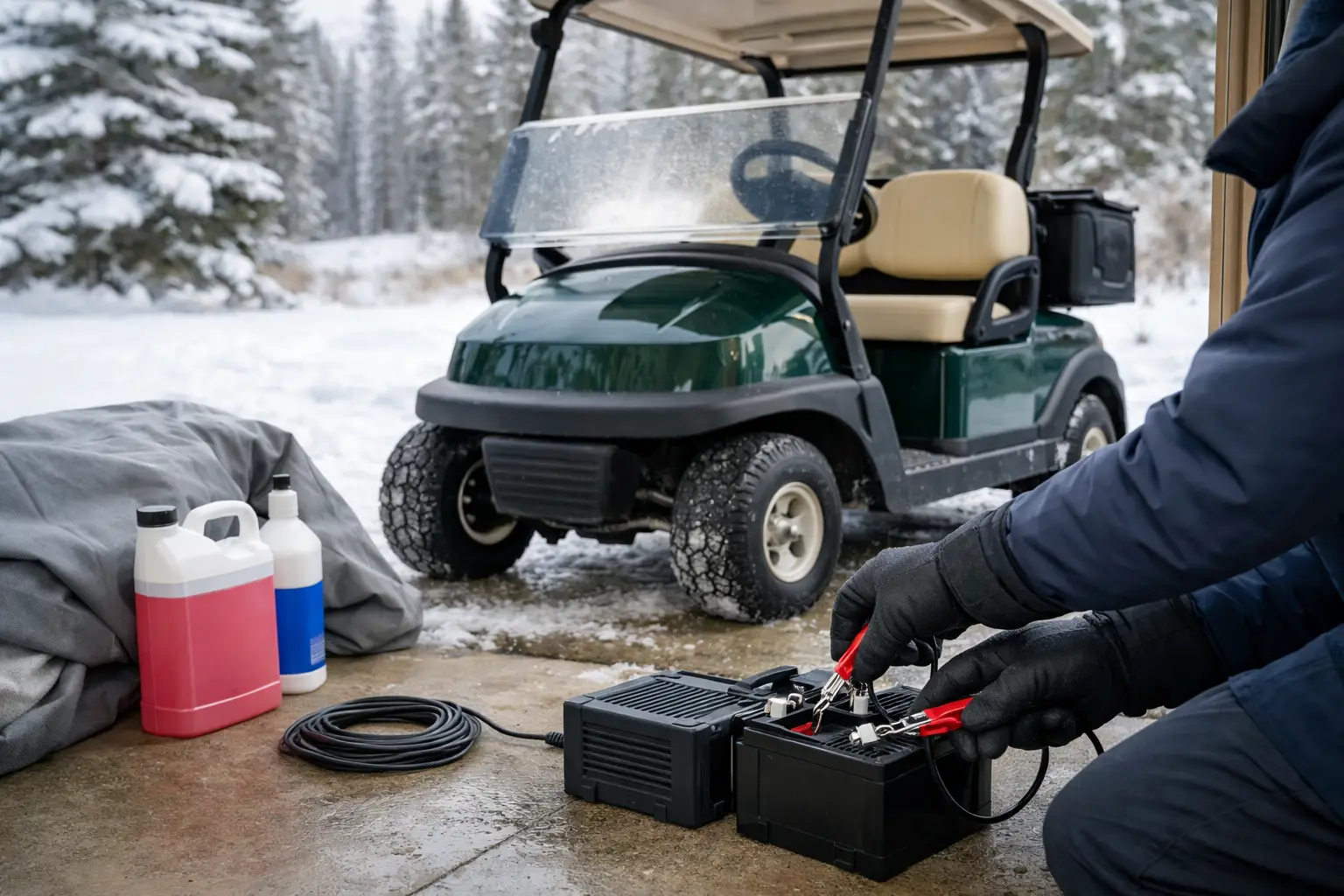
A cart that sits through winter without a plan can come back with a weak battery, flat-spotted tires, rusted connections, and an interior that smells like a damp garage. To winterize an electric golf cart properly, treat storage as preventive maintenance, not simply parking it and walking away.
Whether your cart is used for neighborhood rides, golf community errands, resort cruising, or family fun, a few smart steps now protect the premium features and reliable performance you bought it for. The right routine depends on your battery type, where you store the cart, and how cold your local winters get. Still, the goal stays the same: keep moisture out, keep the battery healthy, and make spring startup easy.
How to Winterize an Electric Golf Cart Properly
Start by checking your owner's manual. Your cart manufacturer may have specific storage directions for its battery system, charger, accessory settings, and recommended state of charge. This matters most with modern lithium-powered carts, which do not follow the same charging rules as traditional flooded lead-acid batteries.
Before putting the cart away, choose a dry, covered storage space with stable temperatures. A garage is ideal. A carport or enclosed shed can work if it stays dry and protects the cart from direct weather. Avoid storing an electric cart on wet grass, bare soil, or a surface that holds moisture. Those conditions invite corrosion underneath the vehicle and can make winter tire care more difficult.
Clean it before you cover it
Wash away dirt, road grit, fertilizer residue, salt, leaves, and spilled drinks. Pay extra attention to the wheel wells, lower body panels, floor mat, and battery area. If you live near the coast or use your cart in a community where roads are treated for ice, this step is non-negotiable. Salt residue can corrode metal components long after the cart is parked.
Let the cart dry completely before it goes into storage. Moisture trapped under a cover is a recipe for mildew, oxidation, and cloudy windshields. Wipe down seats, remove any personal items, and clean out storage compartments. If your cart has a windshield that folds, secure it according to the manufacturer's instructions so winter wind or accidental bumps do not damage the hinges.
A breathable, cart-specific cover is worth using. Skip plastic tarps that trap condensation against the paint, seats, and electronics. A good cover keeps dust and debris off while allowing moisture to escape.
Give the battery system the attention it deserves
Your battery is the heart of your electric golf cart, and winter storage is where the biggest differences between battery types show up.
For lithium batteries, many manufacturers recommend storing the pack partially charged rather than fully charged or nearly empty. A common range is around 50% to 80%, but the manual and battery maker always win. Charge the cart to the recommended level, shut it down fully, and use the battery disconnect or storage setting if your vehicle has one. Some lithium systems require the charger to remain connected; others specifically do not. Do not guess.
For flooded lead-acid batteries, charge the pack fully before storage. Check water levels only after charging, using distilled water as needed. Never overfill cells, and never add tap water. Clean corrosion from terminals with a battery-safe cleaner, then make sure every cap is secure.
AGM and gel batteries generally need less hands-on service than flooded batteries, but they still need the correct storage charge and periodic monitoring. Whatever battery type you own, inspect cables for loose connections, fraying, corrosion, or damaged insulation before the cart sits for months.
Cold temperatures reduce battery capacity, while a neglected battery can discharge to a damaging level over time. If the manual calls for periodic charging, put a reminder on your calendar. Check the cart every few weeks rather than waiting until the first warm weekend to find a dead pack.
Do not leave accessories quietly draining power
Modern personal-use carts can include backup cameras, Bluetooth speakers, light kits, USB ports, heated accessories, and upgraded displays. Those features make every ride better, but some can draw a small amount of power while the cart is stored.
Turn off lights, audio systems, fans, USB accessories, and any aftermarket equipment. Remove phone chargers and portable electronics. If the cart has a key switch, put it in the off position and remove the key. If your model includes a tow-run switch, follow the manual for the correct storage position. Using the wrong setting can prevent proper charging or create issues when the cart is moved.
Protect Tires, Brakes, and Moving Parts
Tires slowly lose pressure in cold weather, and a cart sitting in one spot for months can develop flat areas. Inflate all four tires to the pressure listed on the sidewall or in the owner's manual. Do not overinflate them in an attempt to solve the problem.
For a longer storage period, moving the cart a few inches occasionally can help prevent flat spots. If you have the proper equipment and a level, secure surface, you may also store it with the tires lightly unloaded according to manufacturer guidance. Never rely on a jack alone, and do not improvise with blocks that could shift.
Release the parking brake if the cart is parked on a level surface and can be secured safely with wheel chocks. Leaving a parking brake engaged for a long period can allow components to stick, particularly in humid conditions. If your storage area slopes, safety comes first: use the brake and proper chocks, then inspect the system when you bring the cart back into service.
A quick visual inspection now can prevent a spring service call. Look for uneven tire wear, leaking shocks, torn seat material, cracked trim, or loose hardware. Small repairs are usually easier to handle before storage than after months of exposure.
Keep Pests and Moisture Out of the Cabin
Mice and insects like warm, quiet vehicles. They can chew wiring, nest under seats, and turn a clean cart into an expensive repair. Vacuum the interior, especially around seat bases and floor mats, and remove food, wrappers, or drink containers. Leave storage bins empty and dry.
If rodents are common in your area, use non-toxic deterrents around the storage space, not directly on sensitive electrical components. Avoid loose mothballs, harsh sprays, or anything that can stain upholstery or create odors inside the cart. Check the storage area regularly for droppings, gnaw marks, or nesting material.
In humid climates such as Texas and Florida, moisture can be as tough on a stored cart as cold weather. A garage dehumidifier or moisture absorber can help protect upholstery, dash materials, and metal parts. Air circulation matters, too. Do not wrap the cart so tightly that humidity has nowhere to go.
What to Do When Spring Arrives
Before your first ride, remove the cover and inspect the cart in good light. Look under the vehicle for signs of leaks, pest damage, or chewed wires. Check tire pressure, make sure battery connections are secure, and confirm that the charger operates normally. On a lead-acid cart, check water levels again after the first full charge.
Test the headlights, turn signals, brake lights, horn, backup camera, and seat belts if equipped. Drive slowly at first and test braking in a safe area. Pay attention to unusual noises, reduced range, warning lights, or a steering pull. Those are signs the cart needs professional attention before it returns to regular neighborhood duty.
If winter storage revealed a battery concern, brake issue, or accessory problem, do not let a small issue limit your next ride. EV Superstore service teams can help keep your cart ready for the season ahead, from battery inspections to routine maintenance. A little off-season care means that when the weather turns, your cart is waiting for the next cruise, not waiting for repairs.